In a standing forward fold, it is easy to measure the pose by how close your hands get to the floor. But that distance says little about what your body needs in that moment. A more useful practice begins by noticing where movement feels clear, where it feels guarded, and how your breath responds.
Start with the ground
Before folding, feel the contact under your heels and the base of your big toes. Let your knees soften, then hinge at the hips only as far as you can keep your weight steady. This gives you a starting point based on sensation, not on someone else’s range of motion.
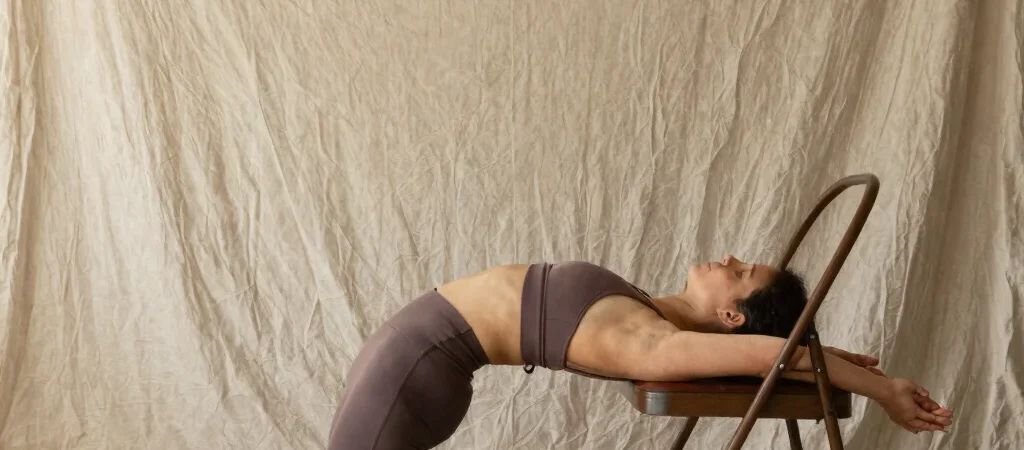
A wall or chair can make the exploration more spacious. Rest your hands there and notice whether your back, hamstrings, or breath change when you reduce the effort of reaching. Support is not a lesser version of the pose; it can help you pay closer attention.
Let breath set the pace
Move slowly enough to notice the transition into and out of a pose. If you hold your breath to move farther, that is useful information: ease back until the breath can continue without strain. The aim is not to make every inhale and exhale perfectly smooth, but to stay curious about what changes as you move.
Keep the question open
Instead of asking whether a pose looks right, ask what would make it feel more supported right now. You might bend your knees, widen your stance, or come out of the shape altogether. That small act of listening is movement and awareness together—and it gives you something to carry beyond the mat.